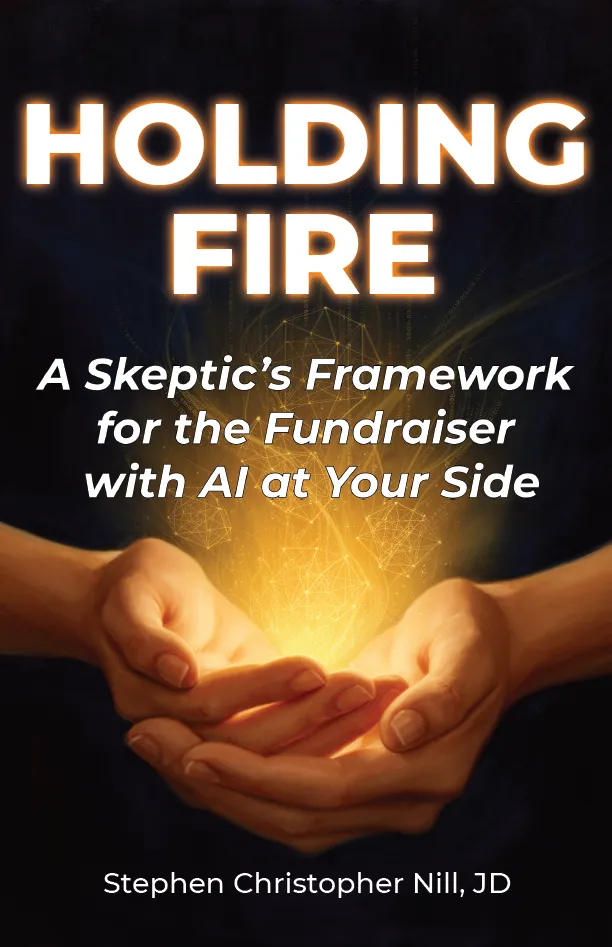
Holding Fire: A Skeptic’s Framework for the Fundraiser with AI at Your Side teaches the full method Aardie follows. Project Aardvark is where you can experience the right way to work with AI in the development office.
Every practice session is a conversation. Aardie opens it and walks through the work with you: reading the record, planning the outreach, drafting the words, and asking the questions a good mentor would ask. One rule stands above the rest: the relationship belongs to the fundraiser and the donor, and everything Aardie does must strengthen it or step aside.
Feeding Springfield is a community food bank where the fundraising is scrappy and the donors give what they can. Aardvark University is an advancement shop where relationships run long and personalized philanthropy goes deep. Each world carries its own donor roster and its own cast of characters, and more worlds may follow.
Every person in these worlds is invented, and every record is fictitious. Real donor information has no place in Project Aardvark, which keeps the practice safe for everyone it touches.
Project Aardvark asks for no account. Your practice work stays in this browser for the session and is not saved between visits, and the messages you send Aardie pass through without being stored. Come back another day and each world opens fresh, on its own roster, ready for a new Monday morning review.
Enter a world and Aardie starts where the book starts: the Monday morning review of the whole donor base, the strategic anchor of the practice. The briefing reports what needs attention, and the session follows what it finds. You never pick a lesson from a menu; a real relationship-building system would not ask you to. Aardie already knows the base and guides the week accordingly.
The Human-Centered AI Framework is the rulebook Aardie follows in every world, and the complete text is public at charitychannel.com/framework. Reading it shows you how Aardie decides what to do and why every real decision stays with you.
Aardie draws on work you can read for yourself. Two books anchor its coaching: Holding Fire, which teaches the method, and Steven Meyers’s Personalized Philanthropy, the source of the multidimensional gift counting Aardie can walk you through. Its ethical grounding comes from the profession’s own standards—the Association of Fundraising Professionals’ Code of Ethical Standards and Donor Bill of Rights, together with the National Association of Charitable Gift Planners’ Guidelines for Reporting and Counting Charitable Gifts and Model Standards of Practice for the Charitable Gift Planner.
Aardie’s instructions distill these sources in Project Aardvark’s own words rather than reproducing them, and the linked originals are the authoritative texts, maintained by the organizations that publish them.