Every donor deserves personal attention.

Project Aardvark is where fundraisers learn to give it with AI at your side, practicing on realistic donor records with Aardie, an AI coach built to keep the relationship between fundraiser and donor strong. No real donor data is ever involved.

Your first Monday morning starts here

Choose a practice world to begin.

Project Aardvark is free, with no account to create. In either world, Aardie reviews the whole donor base and starts the week from what it finds.

Community food bank

Feeding Springfield

Feeding Springfield is the setting of Holding Fire: a community food bank stretched thin and leaning on individual donors to keep its shelves full. Meet a caseload of small and mid-level supporters and practice the steady, personal attention that keeps them giving.

Start the Monday morning review

University advancement

Aardvark University

At Aardvark University, an advancement office works a portfolio of alumni and major-gift prospects. Navigate longer relationships and larger asks, and practice the craft of personalized philanthropy: designing gifts around what a donor most wants to accomplish.

Start the Monday morning review

Two books stand behind Aardie.

Project Aardvark is the hands-on companion to Holding Fire and draws its gift-design craft from Personalized Philanthropy, both published by CharityChannel Press. Together they are the method Aardie follows.

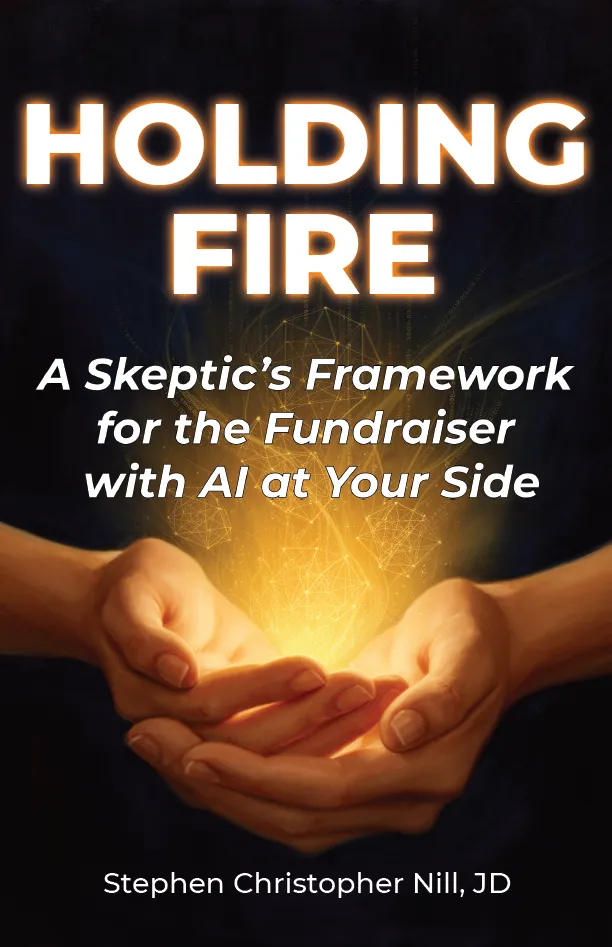
Holding Fire book cover

Holding Fire: A Skeptic’s Framework for the Fundraiser with AI at Your Side

Holding Fire offers a working method for putting AI to work in service of the donor relationship, with judgment and humanity amplified rather than replaced. Aardie’s published operating rules are drawn from its pages.

Buy the book direct

Also available from Amazon and other booksellers.

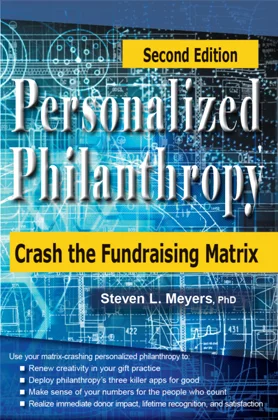
Personalized Philanthropy book cover

Personalized Philanthropy: Crash the Fundraising Matrix

Meyers breaks out of the fundraising silos and designs gifts that mesh what donors want to accomplish with what organizations most need. Aardie carries his craft into both worlds.

Learn more

The practice runs in three steps.

Enter a fictitious organization.

Step into a realistic nonprofit with its own staff and its own donor base. Everything is invented, so nothing is at stake.

Start the Monday morning review.

Aardie opens the week the way the book does. It reviews the whole donor base and answers a single question: what in the portfolio needs attention this week?

Work the week together.

Follow what the review found, meeting the person behind each record with none of the real-world risk. Aardie drafts alongside you and invites you to think critically rather than simply hand you answers, and the record updates as the week’s work gets done.

It is built for the fundraiser in the chair.

Project Aardvark serves working fundraisers who meet AI with curiosity and skepticism at once. They want its help with the workload and insist that the relationship with each donor stays theirs, with human judgment in the driver’s seat. Gift officers and annual-giving staff will find their own caseloads reflected here, and so will the advancement teams that divide the work across portfolios. It also serves anyone who oversees an organization’s donor records and wants to see the Human-Centered AI Framework at work before AI ever touches a real record. For the organizations behind them all, it is something simpler: a private place to rehearse before bringing AI to a real donor.

No prior AI experience is required.
Aardie knows its place.

The Human-Centered AI Framework exists to keep the relationship between fundraiser and donor strong while AI carries more of the workload, and Aardie follows it as a published standard rather than improvising. You practice with the same guardrails the framework brings to real donor work. Most of the tools fundraisers use on the job do not come with those guardrails built in, and practicing here is how you learn to carry them with you.

It is built on a published framework.

Aardie operates by the framework’s published Operating Specification, the rulebook drawn from Holding Fire. Its rules set how a draft gets made and where Aardie must stop, including the Rule of Seven and the honored-or-handled test.

It designs gifts around the donor’s intentions.

In the university world especially, Aardie works in the spirit of Personalized Philanthropy, Steven L. Meyers’s craft of designing gifts around a donor’s own intentions rather than the next routine ask.

It steps back for your judgment.

Whenever a real decision is on the table, Aardie hands it to you. It drafts and flags what it finds, and you decide what reaches a donor. The relationship stays human.

Read the Human-Centered AI Framework